Now you can see the portal – and become a customer
Two pieces of news at once: the demo portals are open so anyone can see Kintra from the inside, and the Light and Start plans can be ordered directly.
Read →We write about what actually helps local businesses get stronger on social media. How to read your own tone, when different channels work and what different industries need.
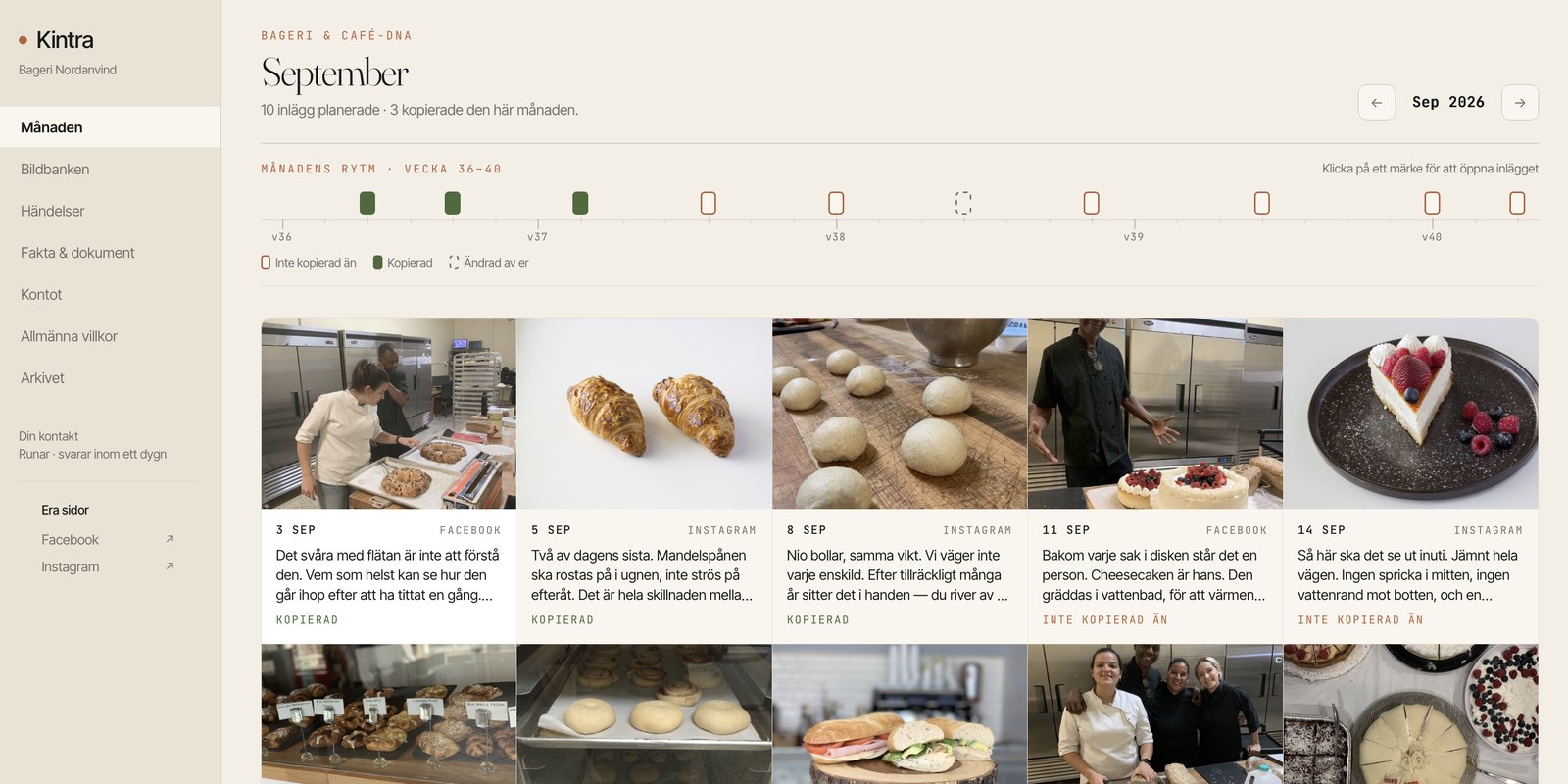
Two pieces of news at once: the demo portals are open so anyone can see Kintra from the inside, and the Light and Start plans can be ordered directly.
Read →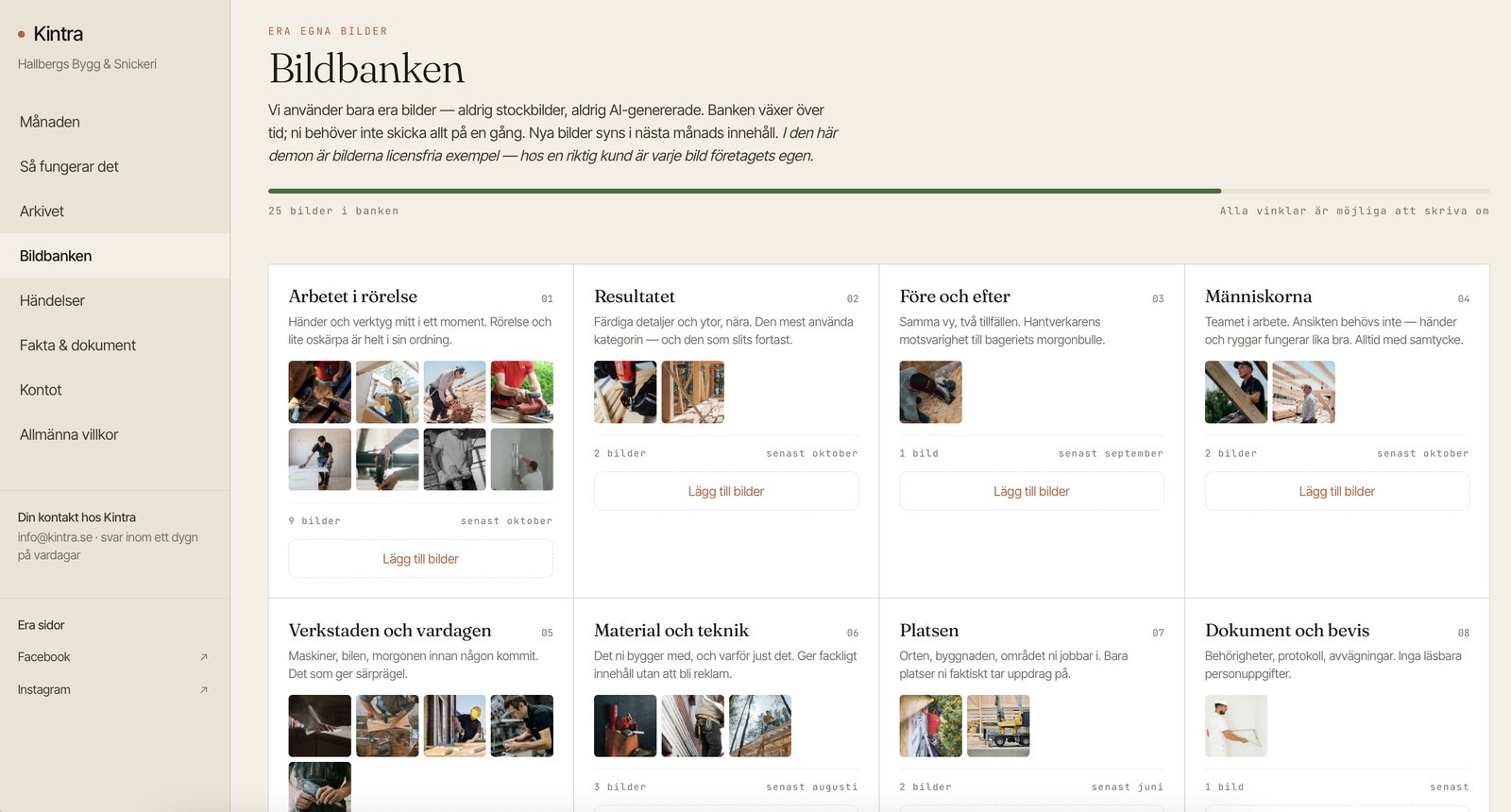
The bakery has its freshly baked bun. The tradesperson has the before-and-after photo. But that’s only one of eight angles in the photo bank for trades and construction.
Read →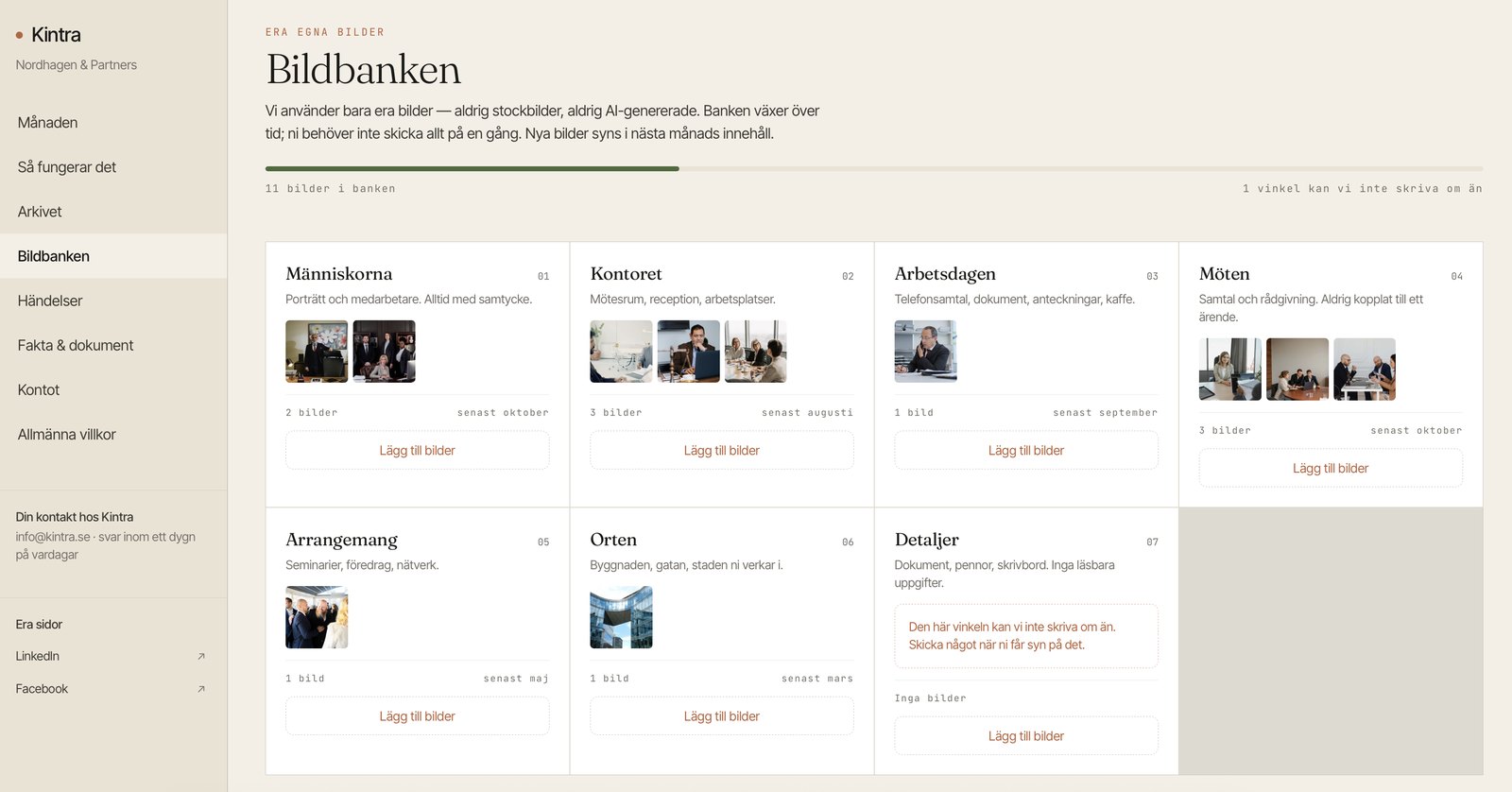
A law firm can’t show its work – most of it is confidential. Yet the firm still needs photos. It can be done, if you know what the photos are allowed to show.
Read →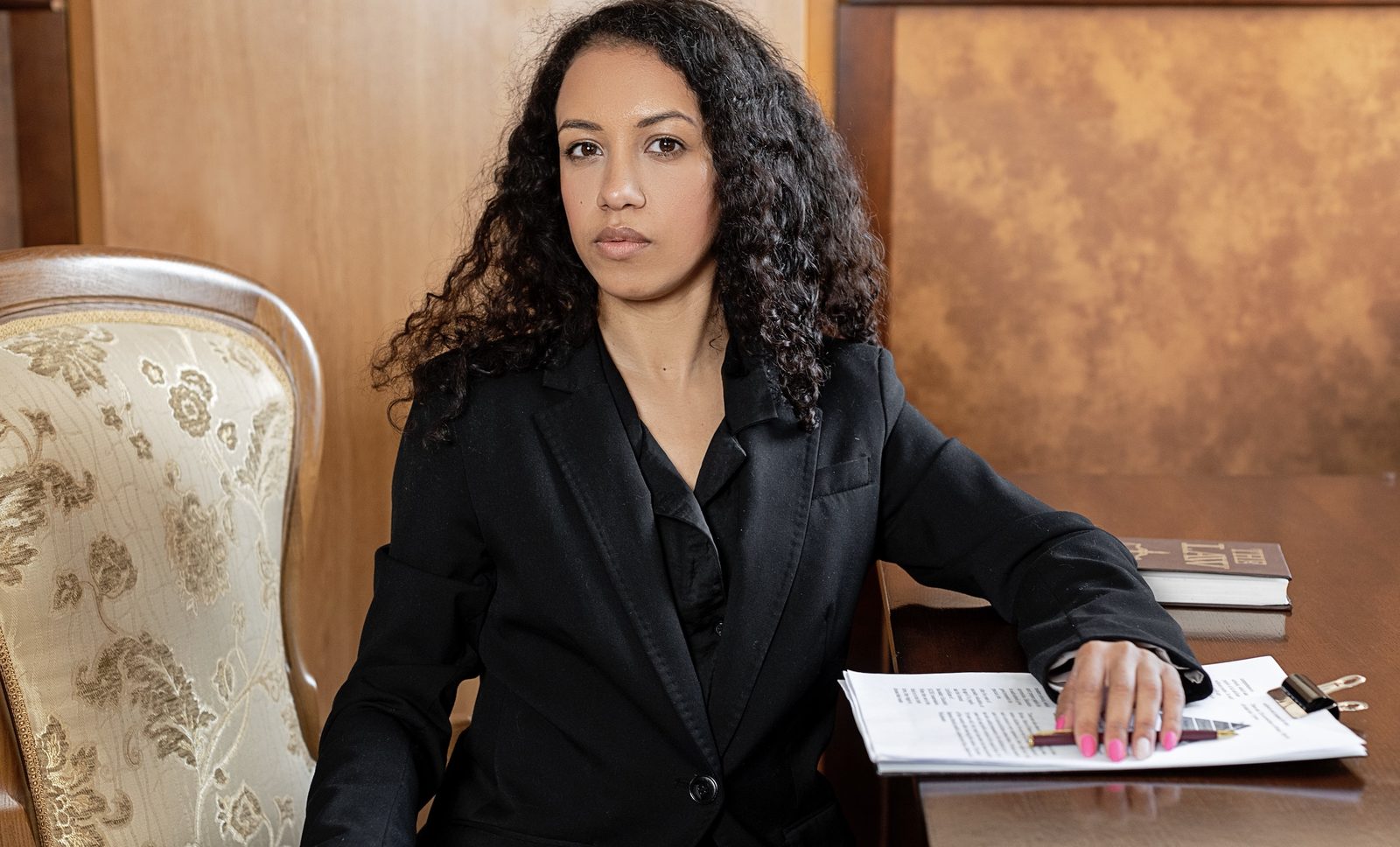
Law firms have completely different needs from bakeries. For four weeks, several firms have tested a version of Kintra built just for them.
Read →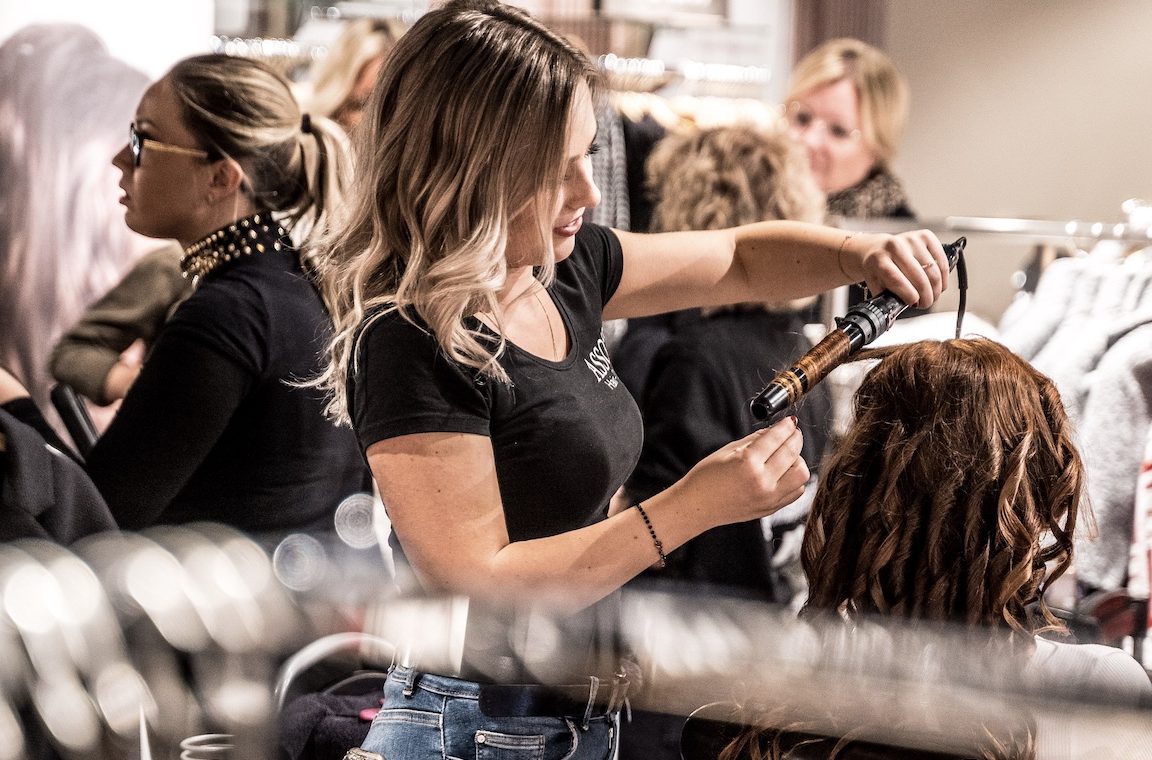
A bakery, a skincare studio and a building firm may all need social media. But they need completely different things from it.
Read →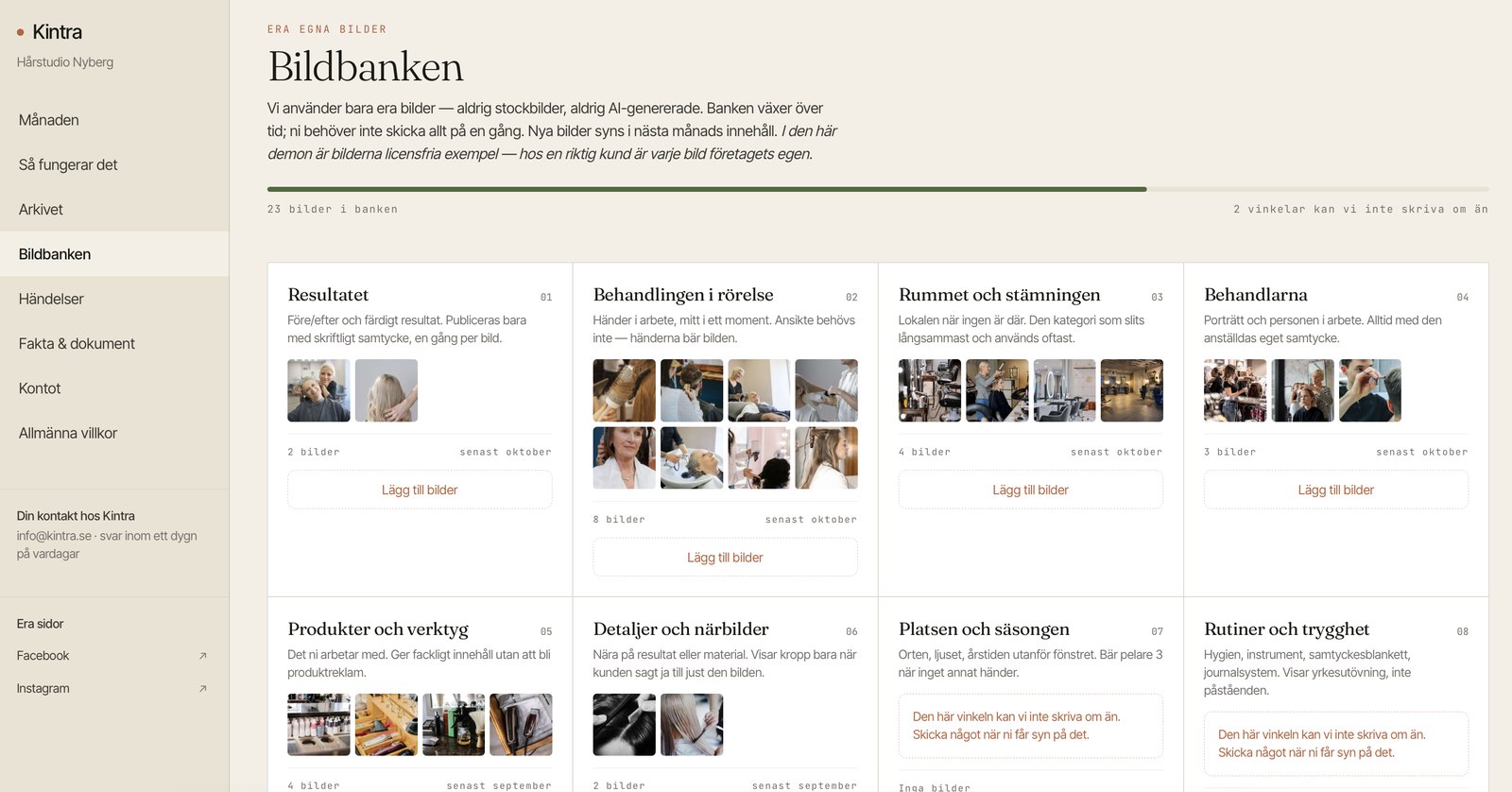
In a hair salon, the best proof of the craft is often another person’s hair. That makes beauty the industry where consent governs the whole photo bank.
Read →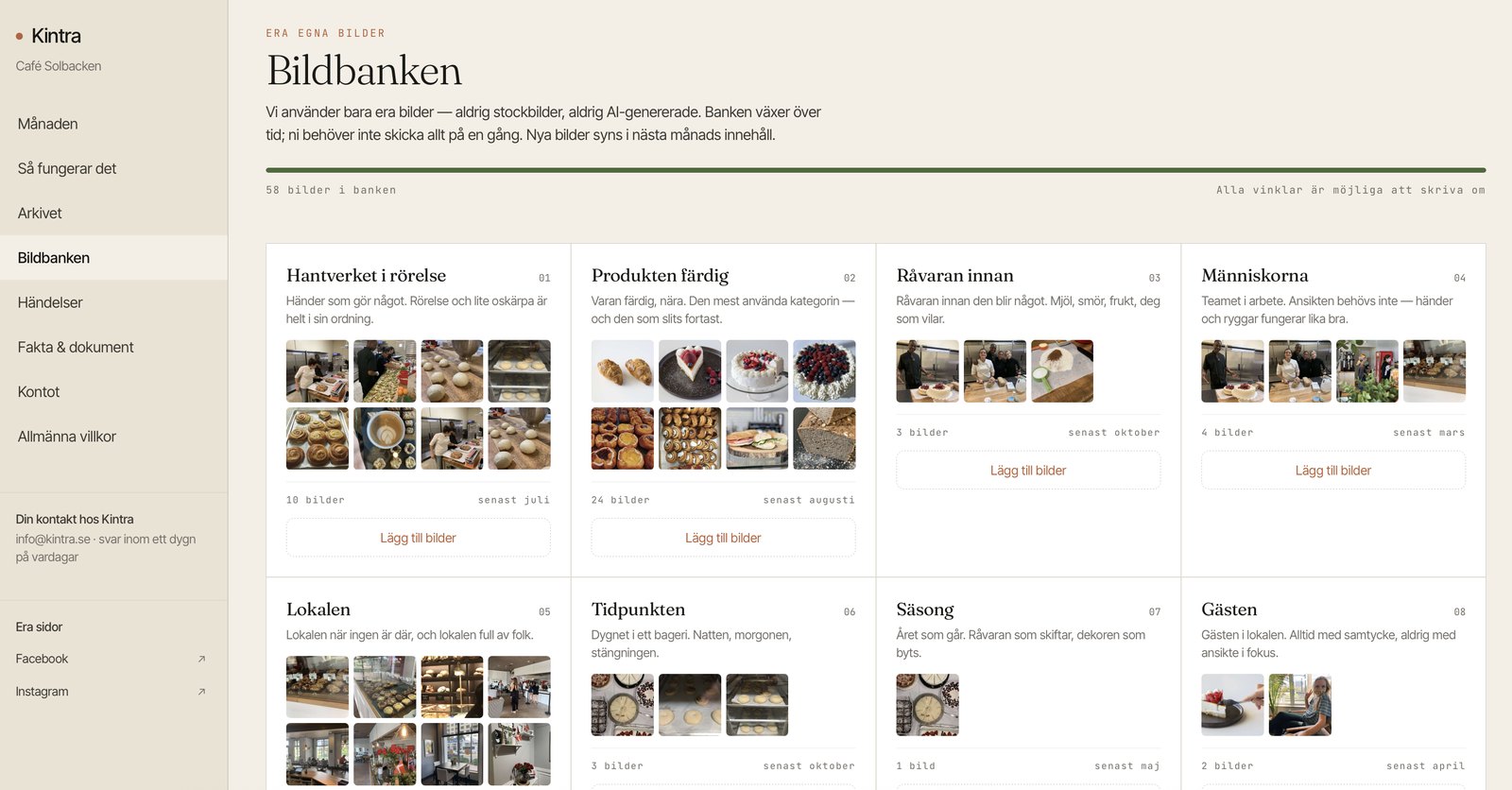
A bakery has more photos than it thinks. The problem is that almost all of them show the same thing: the finished product. That’s why we split the photo bank into eight angles.
Read →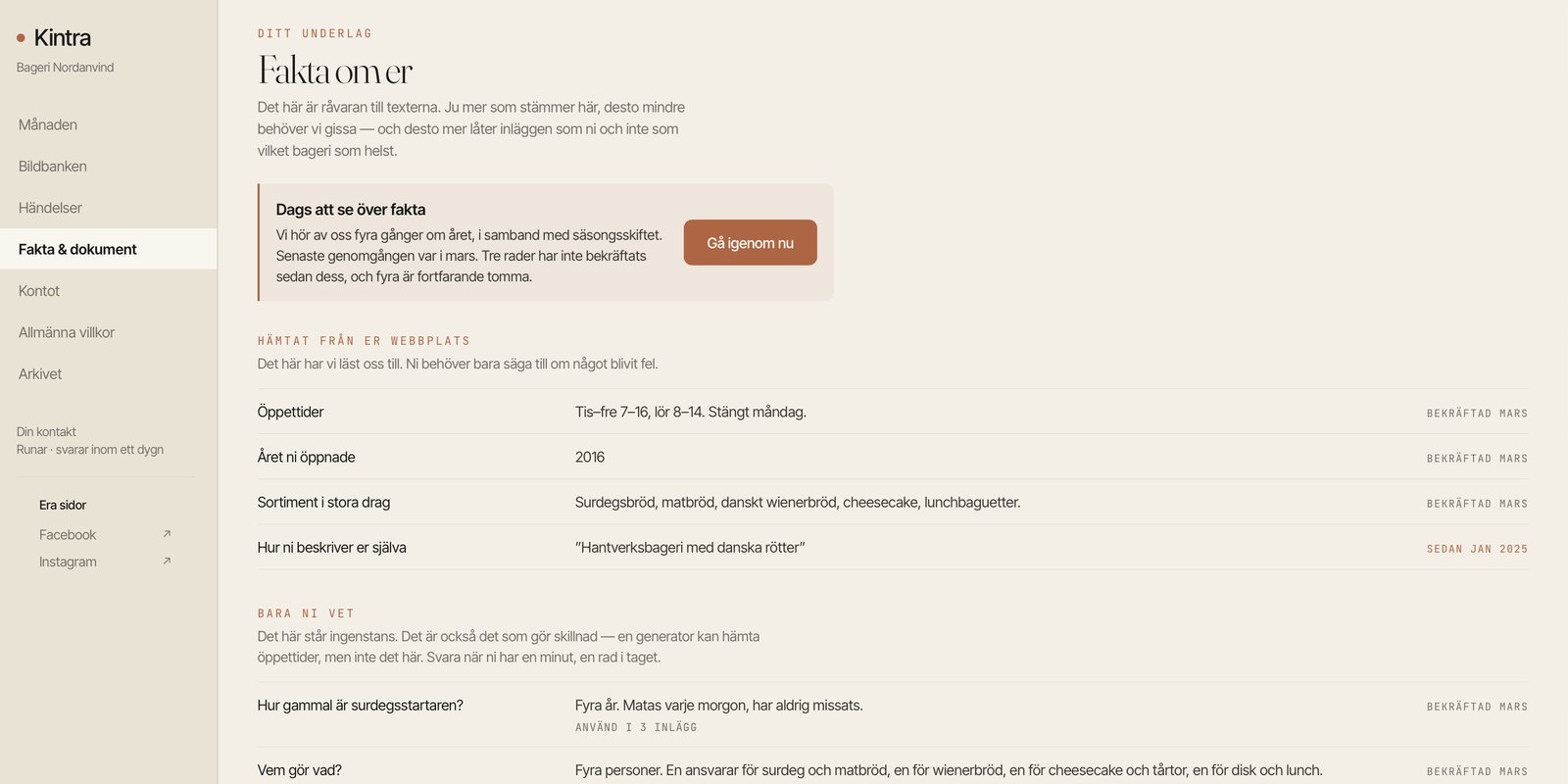
The first part of Kintra’s client portal is now live. The first thing customers meet isn’t a form about social media, but questions about their own business.
Read →
Not every channel suits every business. On when Instagram works, when Facebook works – and when it’s best to put your effort somewhere else.
Read →
Writing a correct text is easy. Writing a text that sounds like one particular person is hard. On the small nuances of language – and why they decide everything.
Read →
Tradespeople often spend more time on quotes and admin than they’d like. Now we’ve started building something just for them: an AI office for small trade businesses.
Read →
A café-bakery that has been in the same place for over a hundred years. How we read it – and how the texts turned out.
Read →
You don’t need an agency to understand how your business sounds. With an hour, a cup of coffee and your last ten posts, you’ll get a long way.
Read →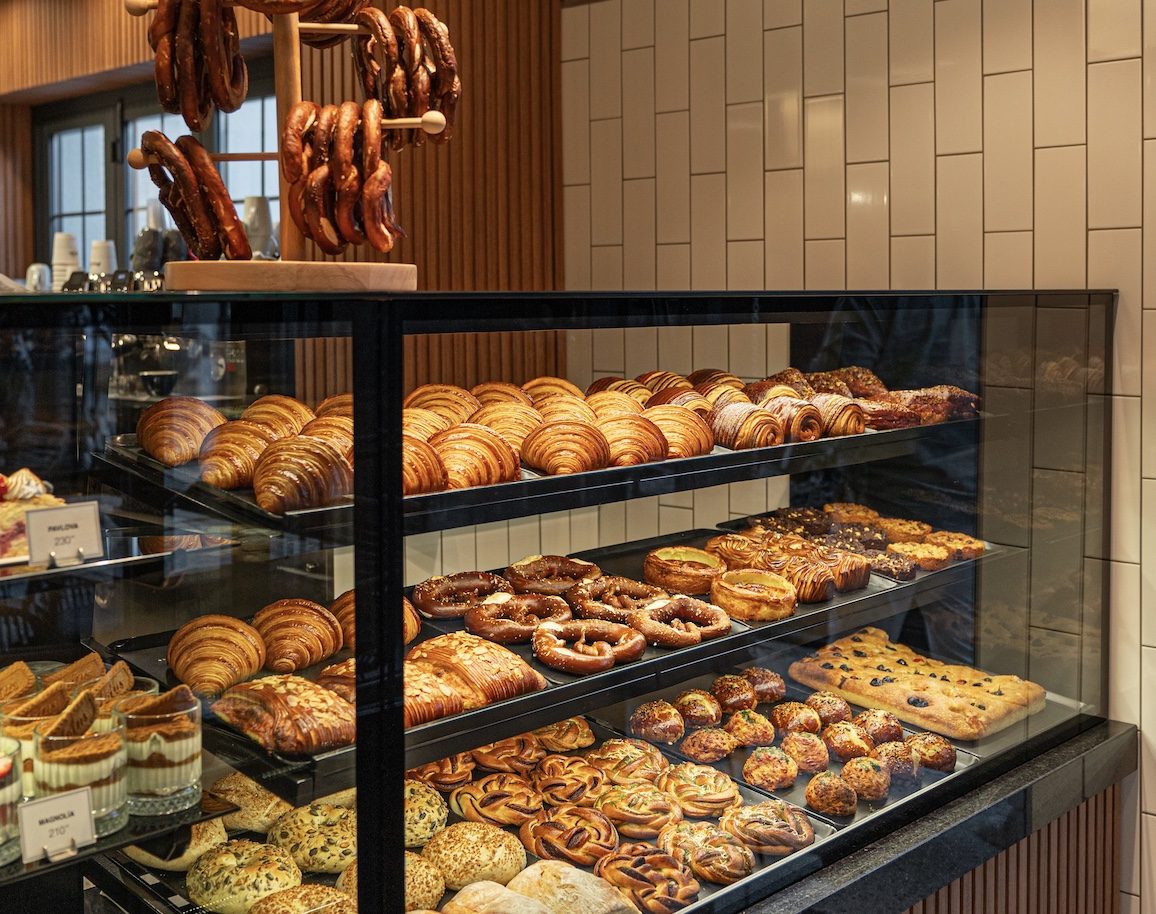
Today we send the texts by email. It works – but it could be much better. So we’re building our own portal, and we’re starting with bakeries and cafés.
Read →
Our blog starts at the same time as our pilot. So we begin with what happens before we write a single word: how we actually read a business.
Read →