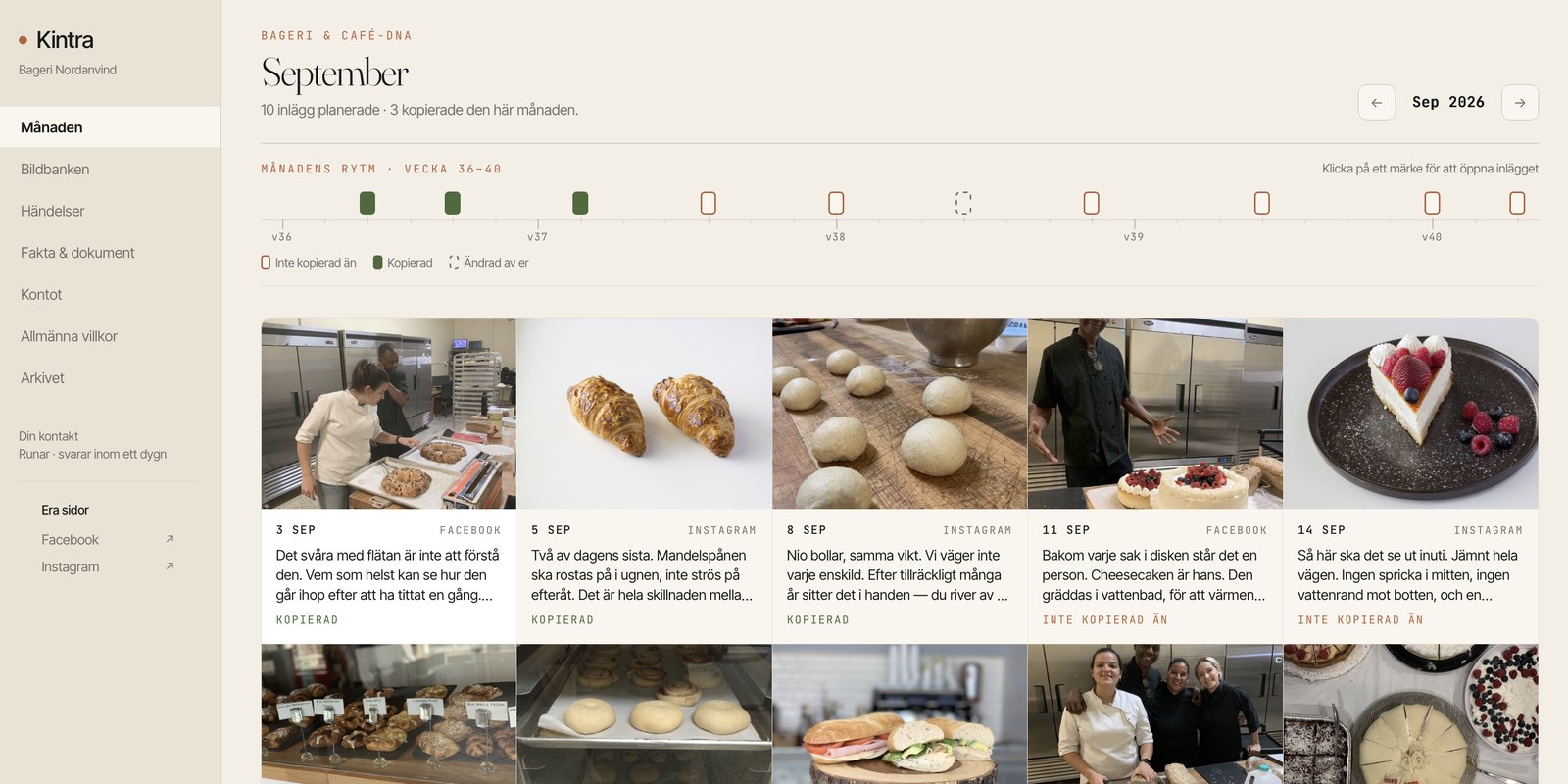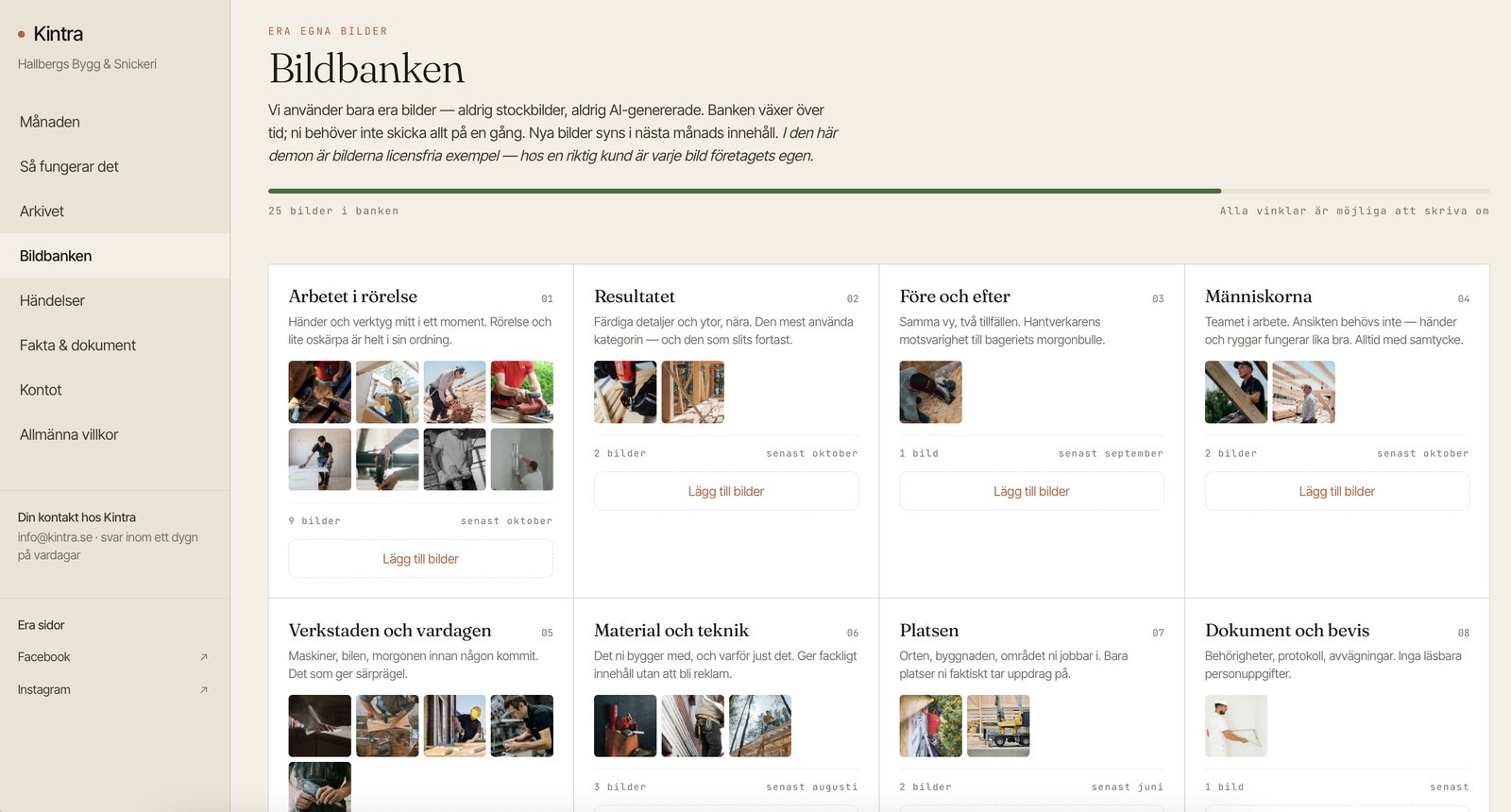
When a new business comes to us, it’s tempting to start writing straight away. We don’t. The first thing we do is read – a bit like a new employee walking around on their first day, listening more than talking.
Why we start by reading
A post that is well written but sounds wrong is worse than no post at all. Customers notice immediately when a local bakery suddenly sounds like a chain, or a carpenter sounds like an ad agency. Trust is built on recognition, and recognition requires that we first understand what customers are supposed to recognise.
What we look at
- The website. What does the business put first? What sits at the top is almost always what the owner is proudest of – even when it’s not what sells the most.
- The latest posts. Which ones got comments and shares, and which were met with silence? Often it’s the simplest photos that get the most response.
- The choice of words. Do they write “we” or “I”? Do they use exclamation marks, emojis, local words? Small things – but they’re what make a text sound like someone.
- What’s missing. Sometimes the most important thing is what nobody mentions: twenty years on the same street, a grandmother’s recipe, a craft few people still master.
Three words
We boil all of this down to three words that describe how the business sounds. Not what it sells – how it sounds. A bakery might be early, honest and warm. A builder might be careful, direct and calm. Those three words become the yardstick for every text we write. If a sentence doesn’t sound like them, we rewrite it.
What we don’t do
We never make up facts about a business. If it isn’t on the website, in their channels or in what the owner has told us, we don’t write it. Nor do we borrow another industry’s tone because it “usually works”. What works for a hair salon in Stockholm rarely works for a farm shop in Värmland.
What it becomes
The result is a short analysis that the owner reads and corrects. It’s one of the most important moments of the whole process – because that’s where we hear “well, I’d never say it like that”. Those corrections are gold. They make the next text sound more like the owner and less like us.
This spring we’re testing this with our first pilot businesses. Here on the blog we’ll share what we learn along the way.