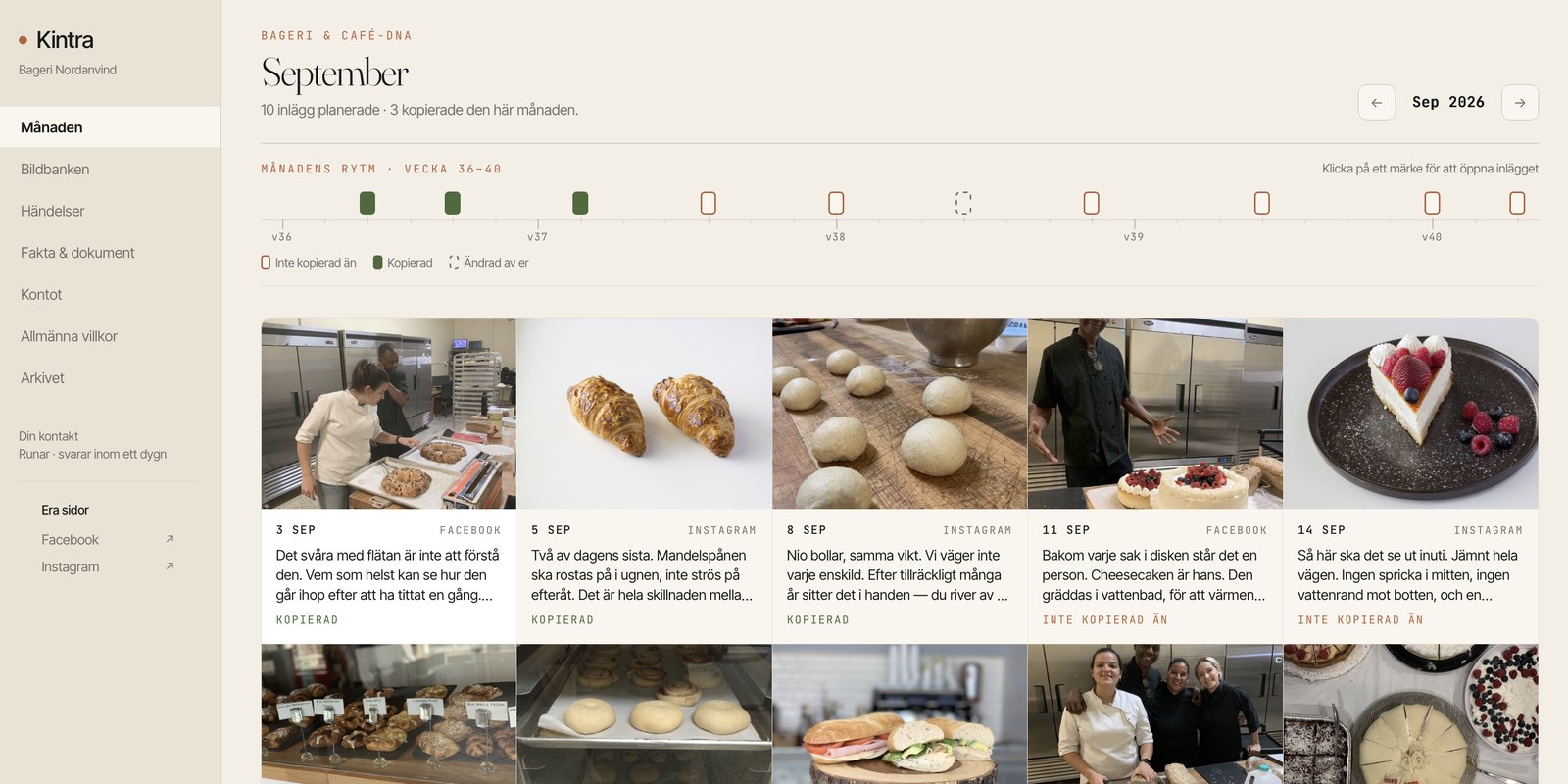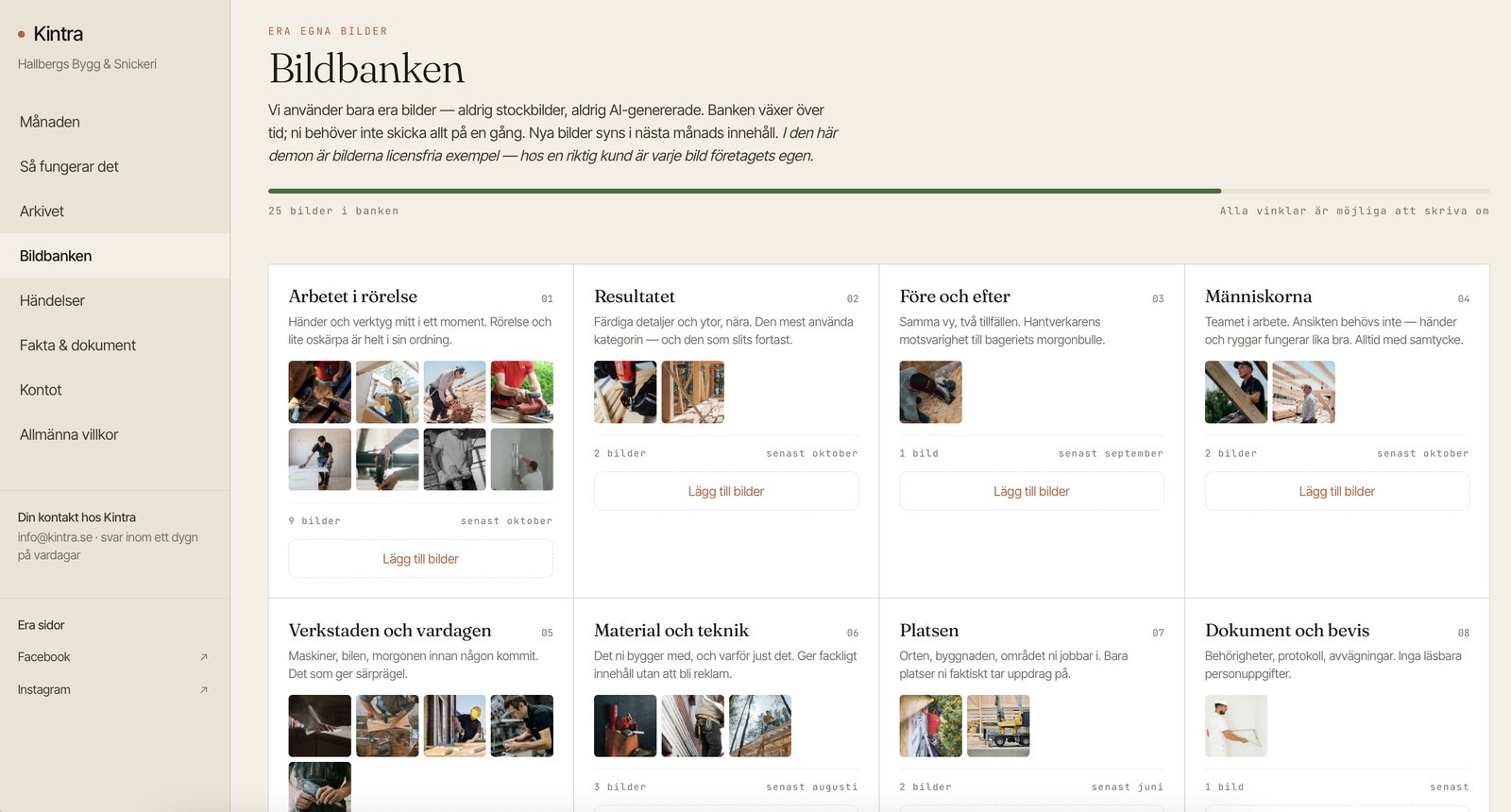
When law firms tested Kintra Legal, the same question kept coming back: what are we even supposed to photograph? A baker has a counter. A carpenter has a building site. A lawyer has a desk full of papers nobody is allowed to read.
Seven angles instead of eight
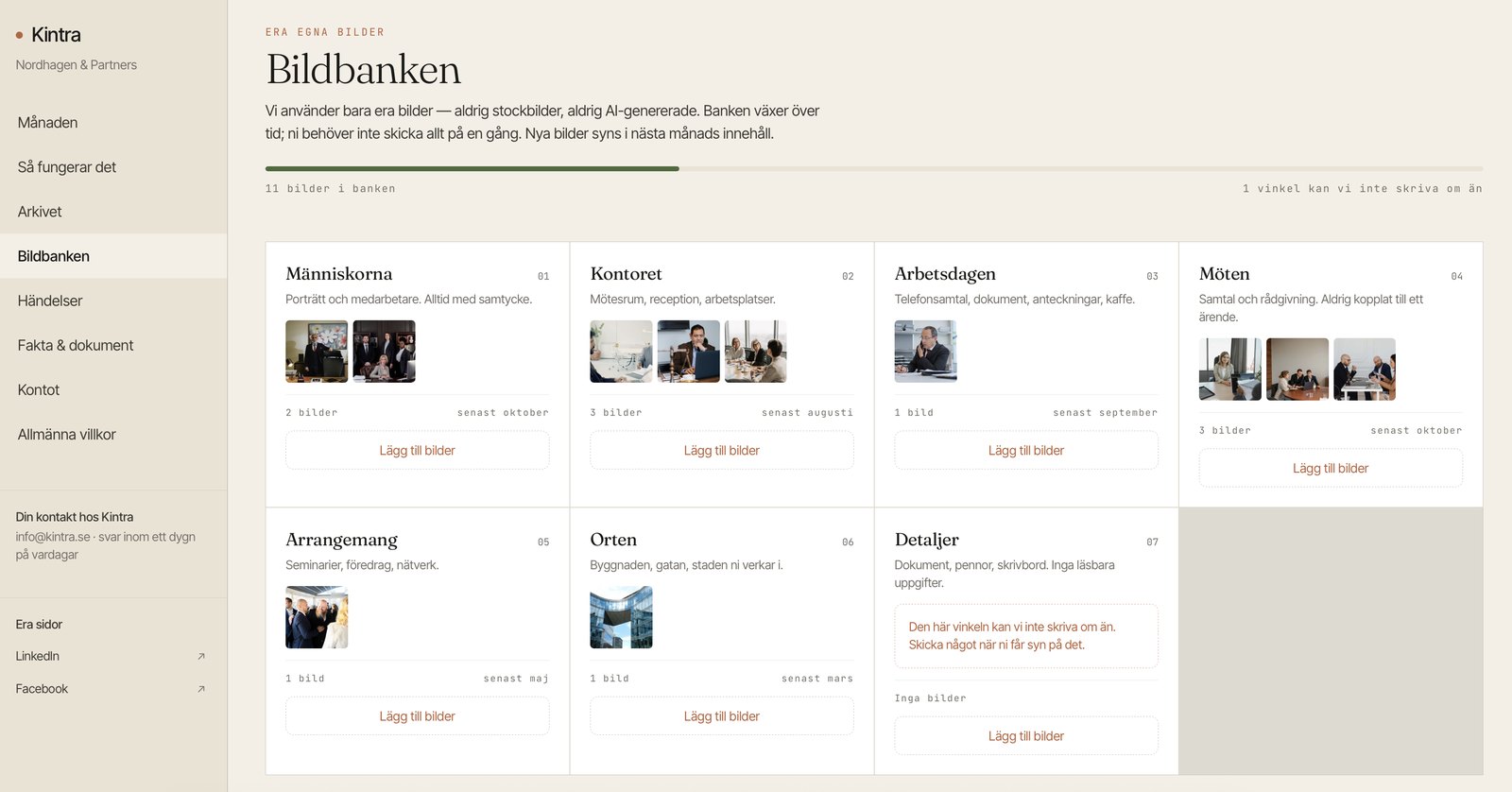
The photo bank for law has seven angles, not eight. There is no equivalent of the bakery’s finished product – a closed case can’t be photographed.
- The people. Portraits and staff. Always with consent.
- The office. Meeting rooms, reception, workstations.
- The working day. Phone calls, documents, notes, coffee.
- Meetings. Conversation and advice. Never linked to a case.
- Events. Seminars, talks, networking.
- The town. The building, the street, the city the firm works in.
- Details. Documents, pens, desks. No readable information.
Two rules that govern everything
The first: a photo from a meeting must never be possible to link to a case. That’s why the Meetings angle is about the conversation itself – not about who is sitting at the table.
The second: no readable information. A document on a desk is a good photo, as long as nobody can read what it says. That applies to names, dates, amounts and anything else that could point to a client.
Fewer photos are enough
A law firm doesn’t need as many photos as a bakery. The texts rest more on what the firm knows than on what it shows, and the questions clients actually ask are often the best raw material. Ten or so well-chosen photos go a long way – and a firm serving businesses and one serving private clients can use the same photo in entirely different ways.
Update 13 October 2026: The legal demo is now open, with three fictional firms: corporate law, family law and a local general practice. The photos in that demo are licence-free examples. Open the legal demo →